
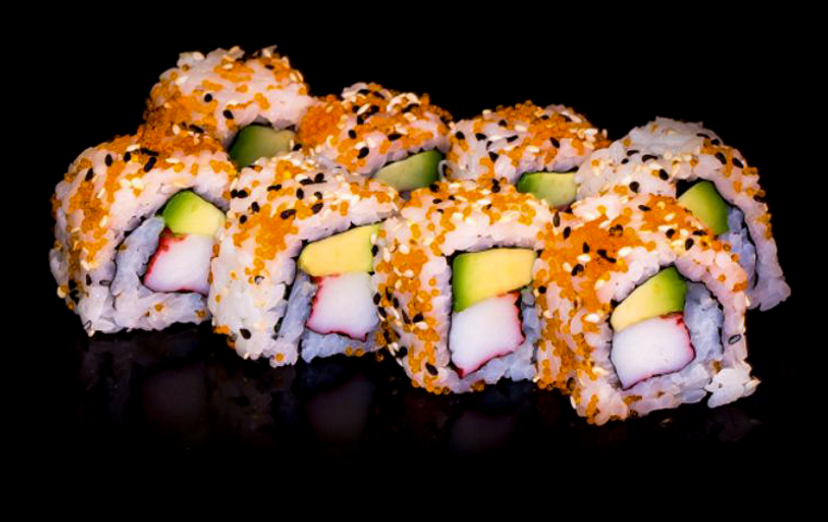
Asian cuisine has become popular throughout Italy, Europe and the rest of the world. A glance at the variety of dishes on restaurant menus reveals many reasons why. Today we would like to introduce one particular type of sushi: uramaki.
What is uramaki sushi?
The word sushi literally means ‘sour’. In Japan it refers to a range of foods prepared with rice, rather than just raw fish as many people assume. There are many types of sushi, named according to their ingredients and how those ingredients are combined, but rice is the main ingredient in all of them.
We all know maki: cylindrical rolls wrapped in seaweed, with rice and other ingredients, usually raw fish and vegetables, inside. Uramaki is an inside-out sushi roll: the rice is on the outside, while the seaweed is closer to the centre.
Uramaki, meaning ‘inside-out rolls’, are prepared as follows:
Nori seaweed at the centre wraps around the filling.
The outside is covered with rice, usually garnished with sesame seeds or fish roe.
Uramaki fillings vary widely, but commonly include:
Raw fish: tuna or salmon are often used, after appropriate freezing treatment to reduce health risks.
Vegetables and fruit: depending on the chef’s creativity, avocado and cucumber are among the most common choices.
The variations are almost endless, including versions adapted for Western diners who do not enjoy raw fish. The first uramaki is said to have been created in California in the early 1970s by a Japanese chef, who filled it with crabmeat and avocado to appeal to customers unfamiliar with raw fish. This is why some menus also call uramaki a California roll.
Uramaki sushi: tasty, light and figure-friendly!
Eating generous sushi meals in Asian restaurants, especially Japanese restaurants, has become common. For some it may be a trend, but its appeal also lies in dishes that are seen as balanced and light, as well as delicious.
Uramaki and sushi in general are described as providing a balanced mix of carbohydrates and protein:
According to this article, each roll can contain around 25% protein, with fat below 5%.
Raw fish contains omega-3 fatty acids, associated with antioxidant activity and cardiovascular function, and is low in sodium. Seaweed supplies vitamins and minerals.
The article gives a general estimate of 50–70 calories per piece of sushi, with ginger or wasabi contributing very few additional calories.
The article therefore encourages enjoying Japanese cuisine, particularly uramaki, as part of the pleasure of eating well.
